
Trust Forms
Free printable living trust forms: a living trust agreement for one person, a joint living trust agreement for two people, and forms to amend or revoke a living trust. Each form is available in PDF and Word.
Trust forms
These forms are not written for any one state. Before using one, check the signing, witness and notarization rules that apply where you live and how assets are transferred into a trust.
Revocable Living Trust Form
A living trust agreement between one grantor and a trustee.
Declaration of Trust Form
The same living trust agreement as the Revocable Living Trust Form, in a separate download.
Joint Living Trust Form
A living trust agreement for two grantors, such as spouses, and a trustee.
Living Trust Amendment Form
Records changes to sections of an existing living trust and includes a notary section.
Revocation of Living Trust Form
States that the grantor revokes the trust and that its remaining assets go back to the grantor.
Revocation of Trust Form
The same revocation as the Revocation of Living Trust form, worded for any trust.
About Trust Forms
A trust is a legal arrangement used to hold and manage property or assets for the benefit of one or more people or organizations. Trust forms may be used to create a trust, identify trustees and beneficiaries, describe how trust property should be managed, or document changes and other matters related to an existing trust.
The two agreements on this page create a living trust: the trust receives and manages assets for the grantor during the grantor's lifetime and distributes the remaining assets after the grantor's death. Assets become part of the trust when they are transferred to it, either when the trust is created or later.
Trust laws and document requirements can vary by state and by the type of trust being created or managed. Review the form carefully and confirm that it is appropriate for your situation before using it.
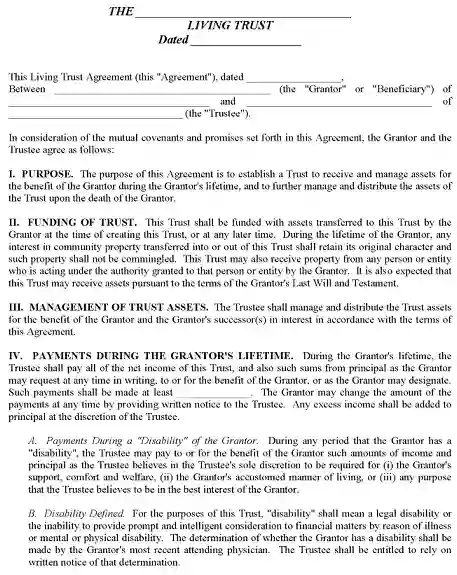
Example of a Trust Form
Trust forms typically include information about the person creating the trust, the trustee, beneficiaries, trust property, distribution instructions, and the powers or responsibilities assigned to the trustee.
Common questions
What is the difference between the revocable living trust and the joint living trust form?
The revocable living trust agreement is made by one person, the grantor, with a trustee. The joint living trust agreement is made by two grantors, such as spouses, with a trustee. Both provide for the trust to manage assets during the grantors' lifetimes and to distribute them after death.
Does signing a trust agreement put my property into the trust?
Not by itself. A living trust generally holds only the assets that are transferred to it, and transferring some assets, such as real estate or financial accounts, may require separate documents. Check what each asset requires before relying on the trust.
How can a living trust be changed or revoked?
The amendment form records changes to sections of an existing trust, and the revocation form states that the grantor revokes the trust. The trust document itself may set rules for amendments and revocation, so read it before using either form.
Do these forms need to be notarized?
Each form on this page includes a notary acknowledgment section. Whether notarization or witnesses are required depends on state law and on the assets involved.
Important Legal Information
Trust laws and requirements vary by state and by the type of trust involved. Before using a form, review it carefully and confirm any applicable requirements regarding signatures, witnesses, notarization, property transfers, or other legal formalities.
Creating or changing a trust may affect ownership and management of property or other assets. Make sure the document accurately reflects the intended trustee, beneficiaries, property, and instructions before it is signed or used.
The forms provided on this website are for general informational purposes and are not a substitute for legal advice. Free Printable Legal Forms does not assume responsibility for the accuracy, completeness, effectiveness, or use of any form provided on this website.
Can’t Find the Form You Need?
Search all available legal forms by keyword, state, or category.
Search All Legal Forms →