
Do-It-Yourself Will Forms
Free printable do-it-yourself will forms for a married person with children or a single person, for recording how your property should be distributed after your death. PDF and Word.
Do-it-yourself will forms
General templates, not written for any one state. Choose the version that fits your family situation and check the witness rules where you live.
Do It Yourself Will
A will for a married person with children: names your spouse and children, leaves the remaining estate to your spouse and then to your children, and names an executor.
Do It Yourself Will Kit for Married Person
A will for a married person with children in its do-it-yourself kit version: spouse and children named, the estate to the spouse and then the children, an executor and witnesses. The same will with a notary block that has a commission line.
Do It Yourself Will Kit for Single Person
A will for a single person in its do-it-yourself kit version: specific gifts, the rest of the estate shared by percentage among the people named, an executor and witnesses. Includes an extra line for a second residuary beneficiary.
About Do-It-Yourself Will Forms
A Do-It-Yourself Will is a document that allows an individual to record instructions for how property and assets should be distributed after death.
The form may include provisions for naming beneficiaries, distributing real and personal property, appointing an executor, and recording other wishes related to the administration of an estate.
Do-It-Yourself Will forms are intended to provide a basic structure for preparing a will without starting from a blank document. Requirements for creating, signing, witnessing, and executing a will vary by state.
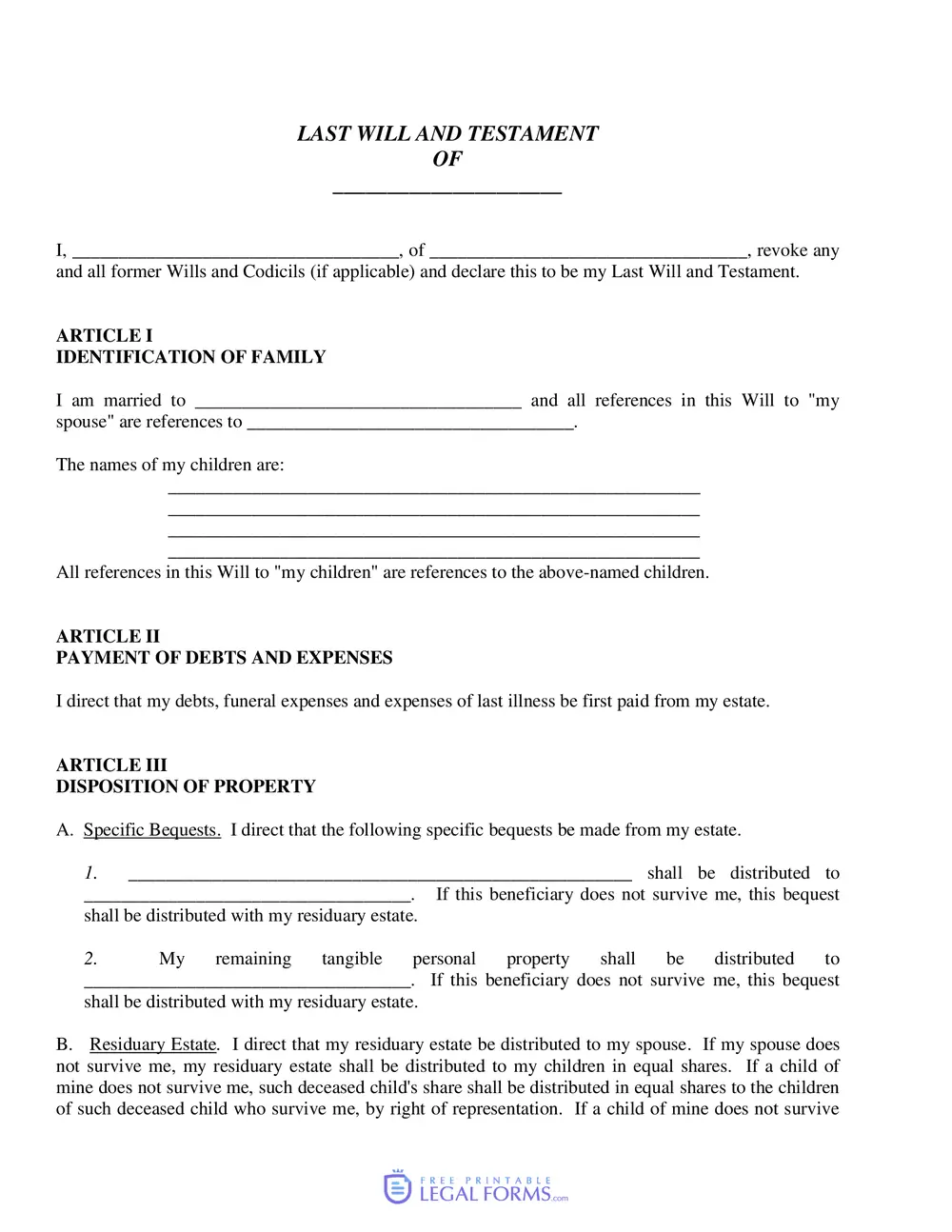
Example of a Do-It-Yourself Will
A Do-It-Yourself Will typically includes information about the person making the will, beneficiaries, distribution of property and assets, appointment of an executor, and signature and witness sections.
Questions About Do-It-Yourself Wills
What Is a Do-It-Yourself Will?
A Do-It-Yourself Will is a will that an individual prepares using a form or template rather than having the entire document drafted specifically for them by an attorney.
What Information Can Be Included in a Do-It-Yourself Will?
A will may include information about beneficiaries, the distribution of property and assets, the appointment of an executor, and other instructions concerning the administration of the estate.
Can I Prepare My Own Will?
Individuals may prepare their own wills, but the requirements for a valid will vary by jurisdiction. The completed document must comply with the rules that apply in the relevant state.
Does a Do-It-Yourself Will Need Witnesses?
Witness requirements vary by state. Review the signing and execution requirements that apply in your jurisdiction before completing the document.
Does a Do-It-Yourself Will Need to Be Notarized?
Notarization requirements vary by jurisdiction. Some related documents, such as self-proving affidavits, may have separate requirements.
Can a Do-It-Yourself Will Be Changed Later?
A will can generally be amended or replaced while the person making it has the legal capacity to do so. The appropriate method for making changes depends on applicable state law.
Is a Do-It-Yourself Will Appropriate for Every Estate?
Not necessarily. More complex estates, unusual property arrangements, business interests, trusts, or complicated family circumstances may require additional planning or professional legal advice.
Important Legal Information
Requirements for creating, signing, witnessing, amending, and executing a will vary by state.
A will that does not comply with applicable requirements may not have the intended legal effect. Review the document carefully and confirm the requirements that apply in your jurisdiction before signing it.
Do-It-Yourself forms may not address every estate planning situation. Individuals with complex estates, trusts, business interests, unusual property arrangements, or other special circumstances may wish to obtain legal advice.
The forms provided on this website are for general informational purposes and are not a substitute for legal advice. It is your responsibility to determine whether a form is appropriate for your circumstances and complies with applicable requirements.
Can’t Find the Form You Need?
Search all available legal forms by keyword, state, or category.
Search All Legal Forms →